Your Guide to Choosing the Right Disinfectant for Your Farm: Protecting Your Herd and Investment
Introduction: The Cornerstone of Farm Biosecurity
Farms are complex environments that demand meticulous attention to hygiene and health to maintain animal welfare and productivity. One of the most critical pillars of biosecurity is effective disinfection. The wrong choice of disinfectant can lead to disease outbreaks, economic losses, and even threaten the health of animals and workers. But with so many products on the market, how do you choose the right disinfectant for your farm? This guide will help you make an informed decision.
Why Proper Disinfection is Crucial
- Prevent Disease Spread: Disinfectants eliminate bacteria, viruses, and fungi that cause diseases.
- Protect Animal Health: Reduces the need for costly treatments and improves animal welfare.
- Ensure Productivity: Healthy animals perform better, benefiting your investment.
- Compliance with Standards: Helps meet health regulations and quality standards.
Key Factors to Consider When Choosing a Disinfectant
1. Target Pathogen Type
Not all disinfectants are effective against all microorganisms. Some are specialized for bacteria, others for viruses, and only a few can tackle fungal and bacterial spores. You must identify the common or potential diseases on your farm to select a disinfectant with the appropriate spectrum.
- Bacteria: Most disinfectants are effective.
- Viruses: Require broad-spectrum disinfectants.
- Fungi: Need specific antifungal disinfectants.
- Spores: The most challenging to eliminate, requiring potent disinfectants like aldehydes or specific concentrations of hydrogen peroxide.
2. Surface Type and Organic Matter Presence
The nature of the surface (porous or non-porous) and the presence of organic matter (such as blood, feces, feed residues) significantly impact disinfectant efficacy.
- Non-Porous Surfaces (metals, plastics, smooth concrete): Easier to disinfect.
- Porous Surfaces (wood, soil, rough concrete): More challenging to disinfect and may require higher concentrations or disinfectants with better penetration capabilities.
- Organic Matter: Many disinfectants lose significant efficacy in the presence of organic matter. Therefore, thorough pre-cleaning is imperative!
3. Environmental Conditions
- Temperature: Some disinfectants work better at specific temperatures.
- pH Level: The stability and efficacy of a disinfectant can be affected by acidity or alkalinity.
- Water Hardness: Hard water can reduce the effectiveness of some disinfectants.
4. Contact Time
Each disinfectant has a specific contact time required to eliminate pathogens. This time must be adhered to ensure maximum efficacy.
5. Safety (for Animals, Humans, Environment)
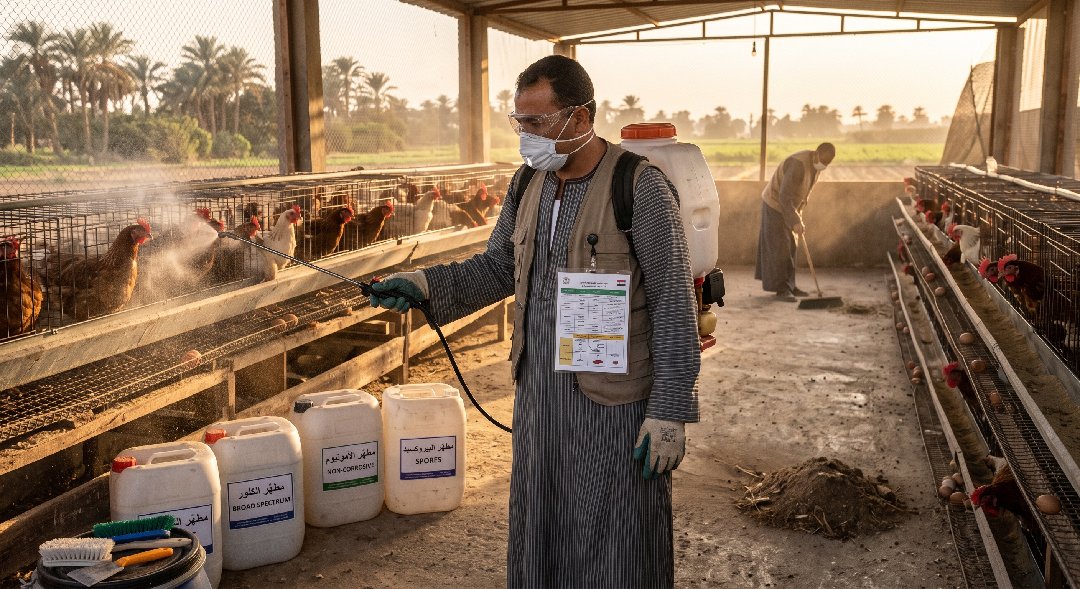
The disinfectant must be safe for use around animals (after adequate ventilation), for farm workers, and have minimal environmental impact. Always read safety instructions and use personal protective equipment (PPE).
6. Cost-Effectiveness and Application Method
Compare the cost of the disinfectant (including dilution costs) with its efficacy. Consider the appropriate application method for your farm (spray, foam, dip, fog).
Common Disinfectant Types and Their Uses
- Quaternary Ammonium Compounds (Quats): Effective against bacteria and some viruses. Good for clean surfaces. Sensitive to organic matter.
- Chlorine Compounds (e.g., Sodium Hypochlorite): Broad spectrum against bacteria, viruses, and fungi. Inexpensive. Affected by organic matter, can be corrosive.
- Iodophors: Broad spectrum. Less affected by organic matter than chlorine. May stain surfaces.
- Phenols: Broad spectrum, effective in the presence of organic matter. Toxic and have a strong odor.
- Aldehydes (e.g., Glutaraldehyde): Very broad spectrum, including spores. Toxic, require good ventilation and long contact time.
- Peroxides (e.g., Hydrogen Peroxide, Peracetic Acid): Broad spectrum, break down into environmentally friendly products. Can be corrosive.
The First and Most Important Step: Clean Before You Disinfect
The importance of this step cannot be overstated. Disinfection does not replace cleaning. All dirt and organic matter (manure, feed residues, dust) must be physically removed (by scraping, washing with soap and water) before applying the disinfectant. Organic matter protects microbes and significantly reduces the effectiveness of most disinfectants.
Conclusion
Choosing the right disinfectant for your farm is a strategic decision that directly impacts the health of your animals and the success of your operation. By understanding the influencing factors and different types of disinfectants, you can build an effective disinfection program that minimizes disease risks and maintains a healthy, safe farm environment. Always remember to consult with veterinary experts or biosecurity specialists for tailored recommendations for your specific farm.