Udder Hygiene: Your First Line of Defense Against Mastitis for a Healthy, Profitable Herd
Udder Hygiene: Your First Line of Defense Against Mastitis for a Healthy, Profitable Herd
In the world of dairy farming, success isn't just about the quantity of milk produced; it extends to herd health and product quality. This is where udder hygiene emerges as a cornerstone for maintaining cow health and ensuring sustained productivity. It's not merely a routine practice, but a critical preventive strategy against one of the most serious diseases threatening dairy farms: mastitis.
What is Mastitis and Why is it Dangerous?
Mastitis is an inflammation of the mammary gland, often caused by bacterial infection. This disease can lead to:
- Sharp decline in milk production: both in terms of quantity and quality.
- High treatment costs: including medications and veterinary services.
- Milk discard: Milk from infected cows is unfit for human consumption.
- Negative impact on animal health: causing pain and suffering to the cow.
- Significant economic losses: directly affecting farm profitability.
Therefore, preventing mastitis is not an option, but an absolute necessity.
Pillars of Effective Udder Hygiene for Mastitis Control
Effective mastitis control requires a comprehensive approach that focuses on hygiene at every stage of milking:
1. Pre-Milking Preparation:
- Udder Cleaning: The udder and teats must be thoroughly cleaned to remove dirt and organic matter.
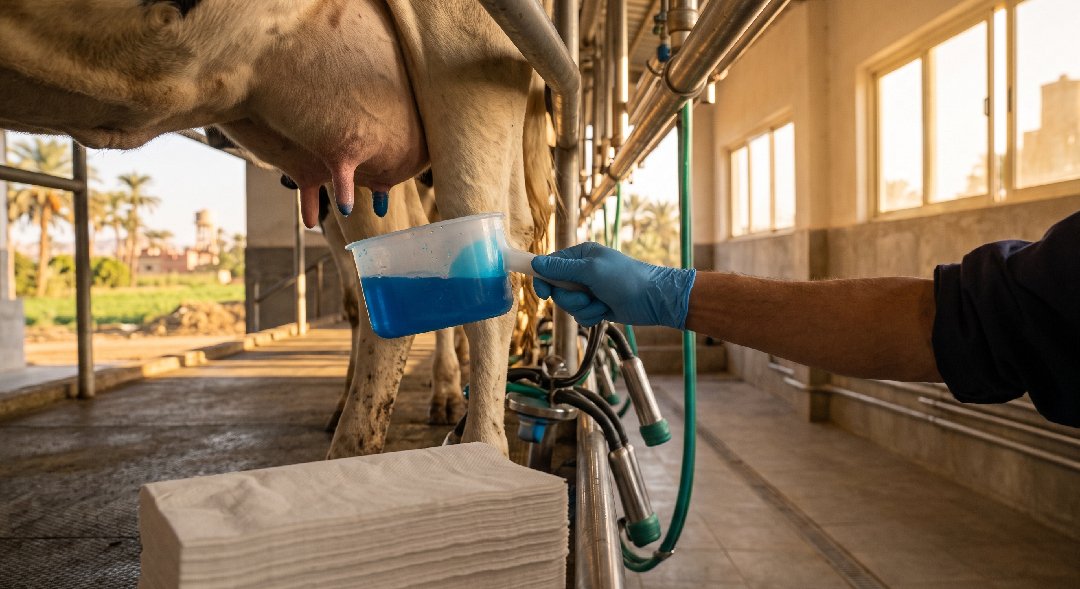
- Pre-dipping: Use a specialized antiseptic solution to dip the teats immediately before milking. This helps kill bacteria on the teat surface. The solution should be left for a few seconds, then the teats should be dried with clean, single-use paper towels for each cow.
- Fore-stripping: Examine the first few streams of milk for any abnormal signs (such as clots or discoloration) that may indicate mastitis.
2. Proper Milking Techniques:
- Gentle Handling: The udder should be handled gently to avoid tissue stress.
- Correct Milking Machine Attachment: Ensure milking cups are attached correctly and quickly to minimize air entry.
- Regular Milking Machine Maintenance: Milking machines must be regularly inspected and maintained to ensure efficient operation and prevent teat damage.
3. Post-Milking Care:
- Post-dipping: Immediately after removing the milking machine, teats should be dipped in a specialized antiseptic solution. This helps seal the teat canal and protect it from bacterial entry immediately after milking.
- Provide a Clean Environment: Cows should return to a clean, dry environment after milking to avoid lying in contaminated areas before the teat canal fully closes.
4. Environmental Hygiene:
- Clean Barns and Holding Areas: Maintaining clean and dry housing areas and holding pens significantly reduces sources of bacteria.
- Clean Bedding: Providing clean, dry bedding reduces udder exposure to contaminants.
- Good Ventilation: Prevents the accumulation of moisture and bacteria.
5. Monitoring and Early Detection:
- Regular Inspection: Regularly inspect the udder for any signs of inflammation.
- Mastitis Tests: Use tests like the California Mastitis Test (CMT) to detect subclinical cases.
- Isolate and Treat Infected Cases: Isolate and treat infected cows immediately to prevent the spread of infection.
6. Culling Chronic Cases:
In some cases, culling cows with chronic mastitis may be necessary to maintain overall herd health and reduce the source of infection.
Benefits of Udder Hygiene
Investing in udder hygiene brings numerous benefits to the farm:
- Increased Milk Production: Healthy cows produce larger quantities of milk.
- Improved Milk Quality: Milk free from high somatic cell counts and antibiotics.
- Reduced Treatment Costs: Lower need for medications and veterinary visits.
- Improved Animal Welfare: Cows are less prone to pain and suffering.
- Increased Farm Profitability: A result of all the aforementioned factors.
Conclusion
Udder hygiene is not just an additional task; it is an integral part of successful dairy farm management. By implementing strict and comprehensive hygiene programs, farmers can protect their herds from mastitis, ensure high-quality milk production, and maximize profitability. Invest in udder hygiene today, and watch your herd thrive.